Welcome to visit our factory at any time !
 LANGUAGE


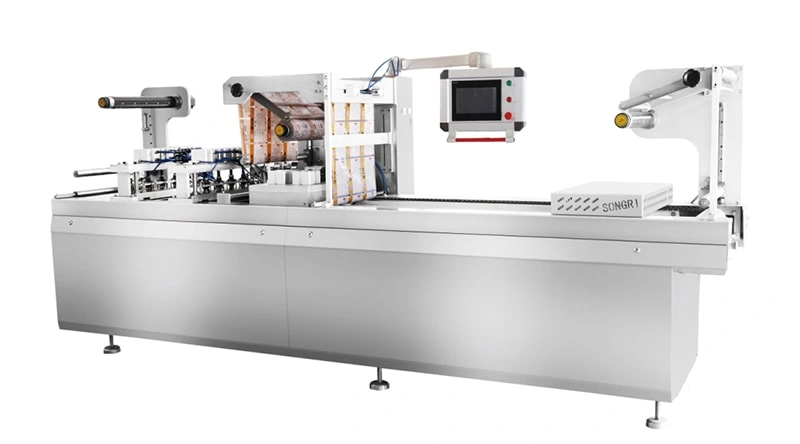
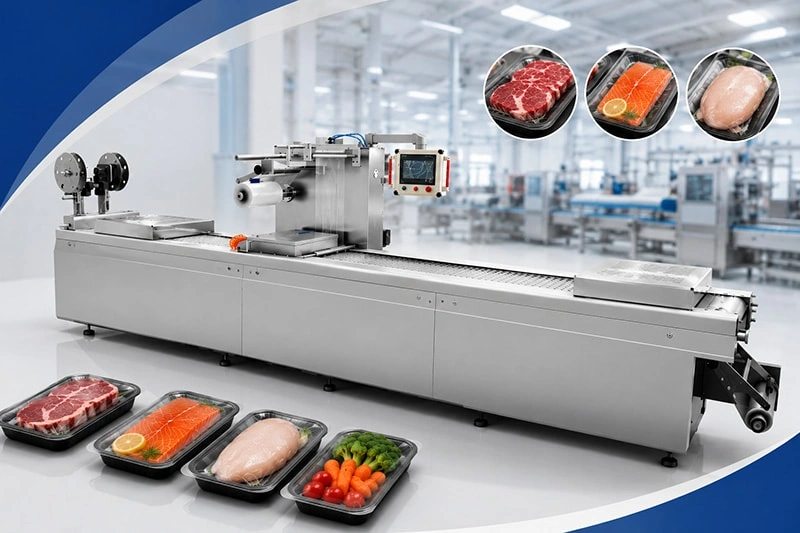
Are fully automatic stretch film vacuum packaging machines compatible with production lines?
With the food industry currently booming, many food companies are facing a dilemma: whilst production capacity continues to rise, the packaging process is lagging behind, failing to keep pace with production, and consequently limiting the company’s further expansion. This situation not only leads to product backlogs but may also increase operational costs, affecting the company’s market competitiveness. So, is there an effective solution? Fully automatic stretch film vacuum packaging machines may well be the key to breaking this deadlock.
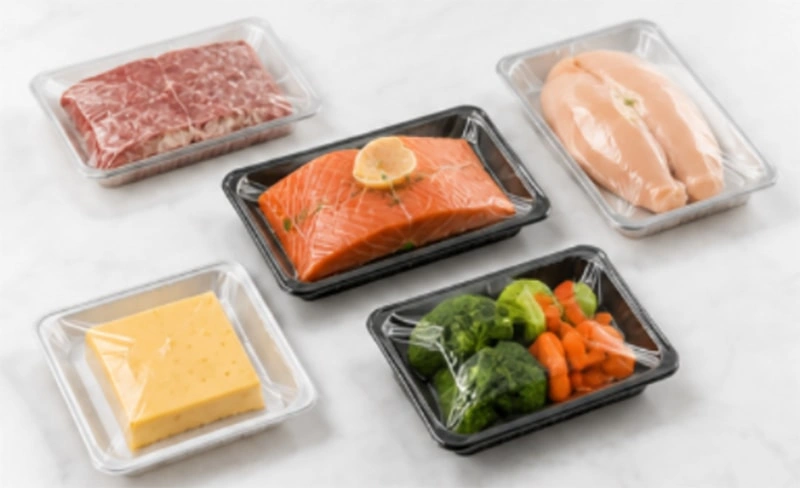
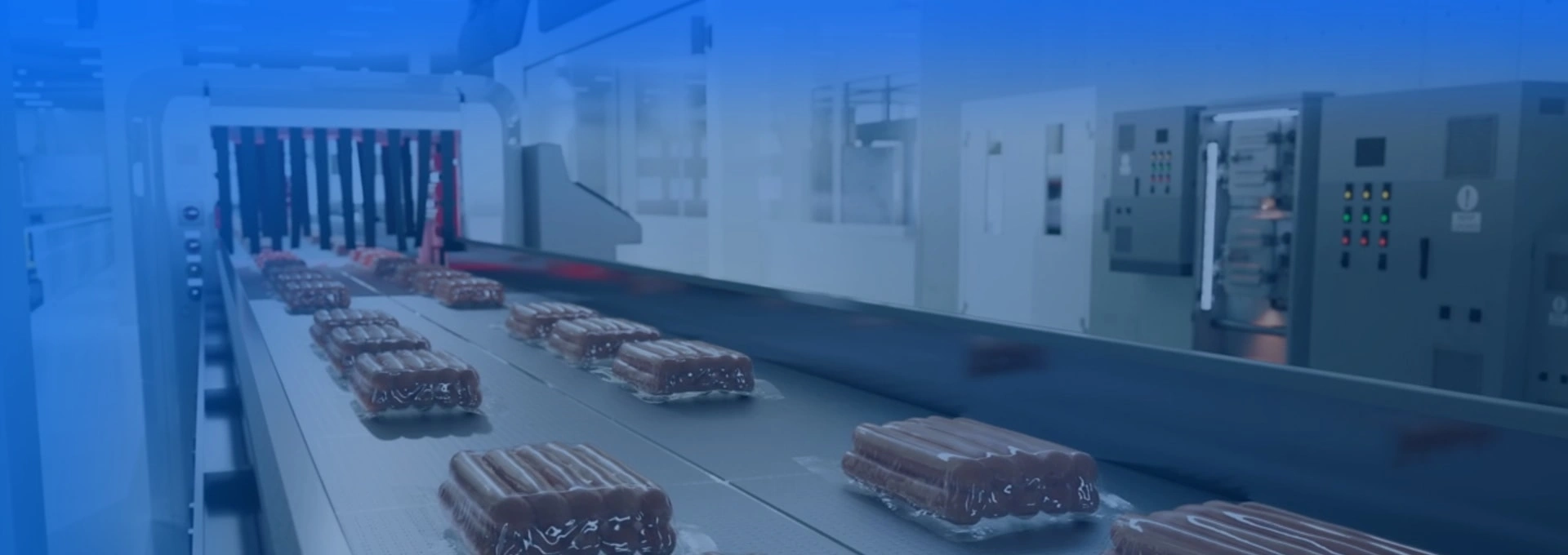
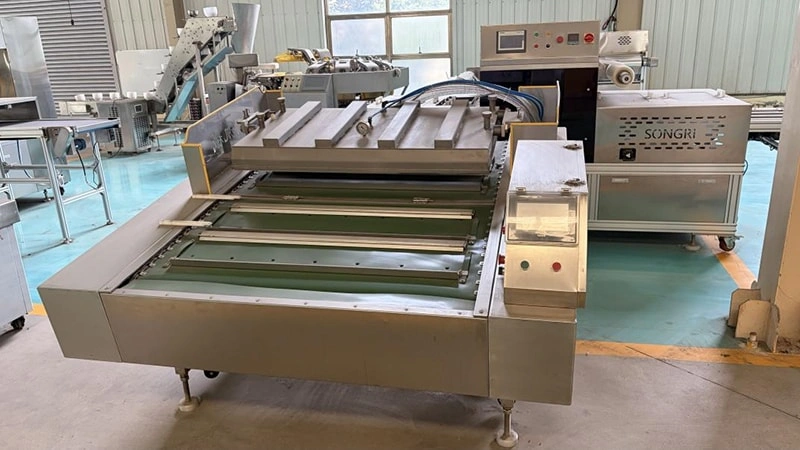
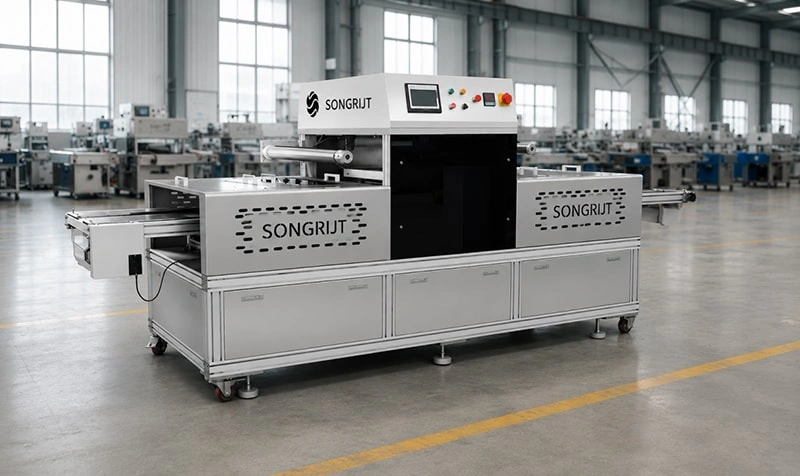
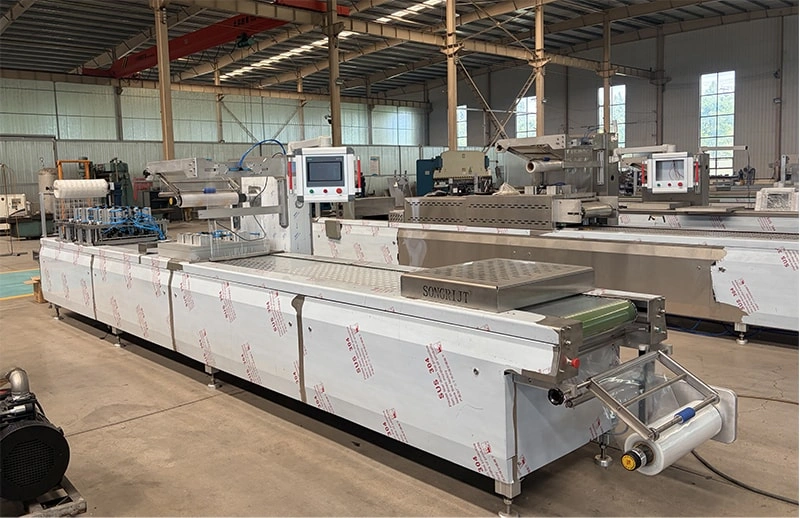
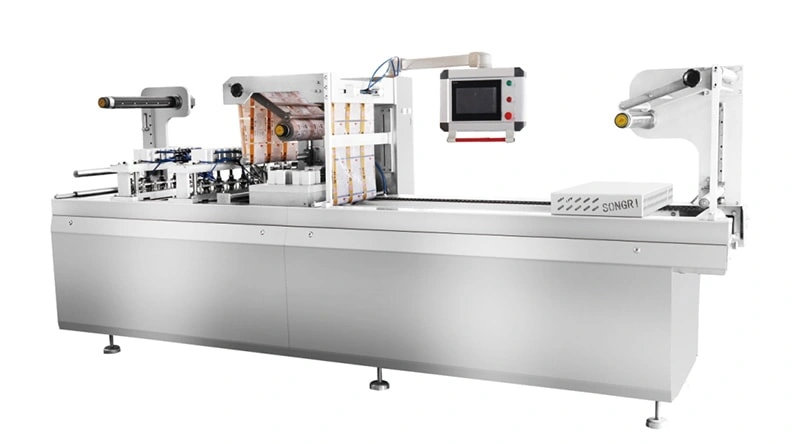
Fully automatic stretch film vacuum packaging machines utilise advanced automation technology to achieve fully automated operations throughout the entire process, from the conveyance and forming of the stretch film, through product loading and vacuum extraction, to sealing and cutting. The working principle is as follows: first, the stretch film on a roll is conveyed to the forming area, where a heating device softens the film; moulds are then used to stretch it into a packaging container that matches the shape of the product. Subsequently, the product is precisely loaded into the formed packaging container, which is then transferred into the vacuum chamber. Within the chamber, a vacuum pump rapidly extracts the air from the packaging, creating a vacuum environment that effectively inhibits microbial growth and extends the food’s shelf life. Finally, the packaging is sealed using a heat-sealing device and cut away from the continuous stretch film, completing the entire packaging process.
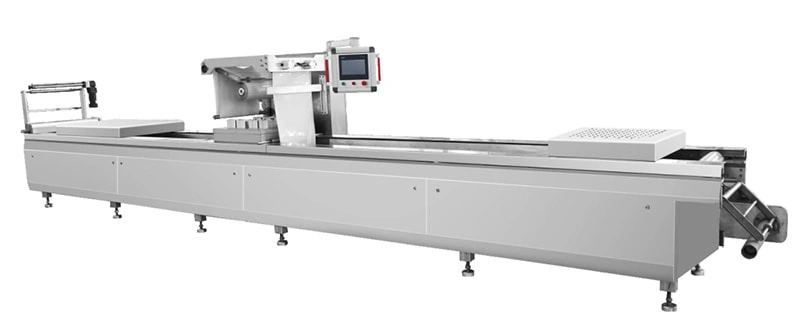
This packaging machine boasts numerous notable features. High automation is one of its core advantages, significantly reducing manual operations and lowering labour intensity and costs. Taking a well-known food processing enterprise as an example, after introducing a fully automatic stretch film vacuum packaging machine, a production line that previously required 10 workers for packaging operations now requires only 2–3 workers for equipment monitoring and maintenance, resulting in a significant reduction in labour costs. At the same time, automated operation eliminates variations in packaging quality caused by human error, ensuring consistency and stability in product packaging.
High packaging speed is another major highlight. Whilst packaging speeds vary across different models of fully automatic stretch film vacuum packaging machines, they generally process dozens or even hundreds of packages per minute, representing a several-fold increase in efficiency compared to traditional packaging methods. This enables businesses to package large volumes of products in a shorter timeframe, meeting market demands for rapid product supply. For instance, during peak food sales seasons, companies can utilise this equipment to boost overall production line efficiency.
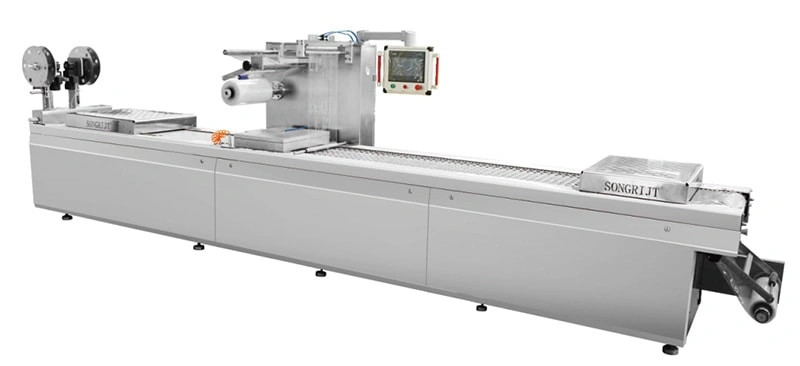
Take a certain meat processing enterprise as an example: prior to introducing this equipment, the production line’s daily packaging capacity was 5,000 packs; following its introduction, packaging efficiency increased by more than fivefold, enabling the packaging of over 25,000 packs of products daily. Monthly output has risen significantly, allowing the enterprise to better meet order demands during peak market seasons. This improvement in production efficiency not only helps companies increase their market share but also reduces the fixed costs allocated per unit of product whilst keeping fixed costs constant, thereby enhancing the company’s economic benefits.
In summary, the fully automatic stretch film vacuum packaging machine, with its advantages of high efficiency, automation and precise packaging, integrates seamlessly into food production lines, effectively resolving the issue of food packaging failing to keep pace with production capacity. When introducing this equipment, enterprises need only pay attention to aspects such as equipment selection, optimisation of production line layout, staff training and cost-benefit analysis to fully leverage its capabilities, thereby enhancing production efficiency and market competitiveness, and achieving sustainable development.



Copyright © 2026 by Shandong Songri Machinery Co., Ltd. All Rights Reserved
Privacy Policy | Sitemap Designed by HUISHANG